What humanoids cannot do today
1Today humanoids can perform selected operations autonomously, not a whole shift.
Industrial operation entirely without operator supervision is beyond today's technology.
Anyone who claims otherwise is talking either about a laboratory or about a very narrow task.
But supervision does not have to be at the machine. The operator sits in the control room and sees the whole fleet on one screen; nobody has to stand by the robot on the shop floor.
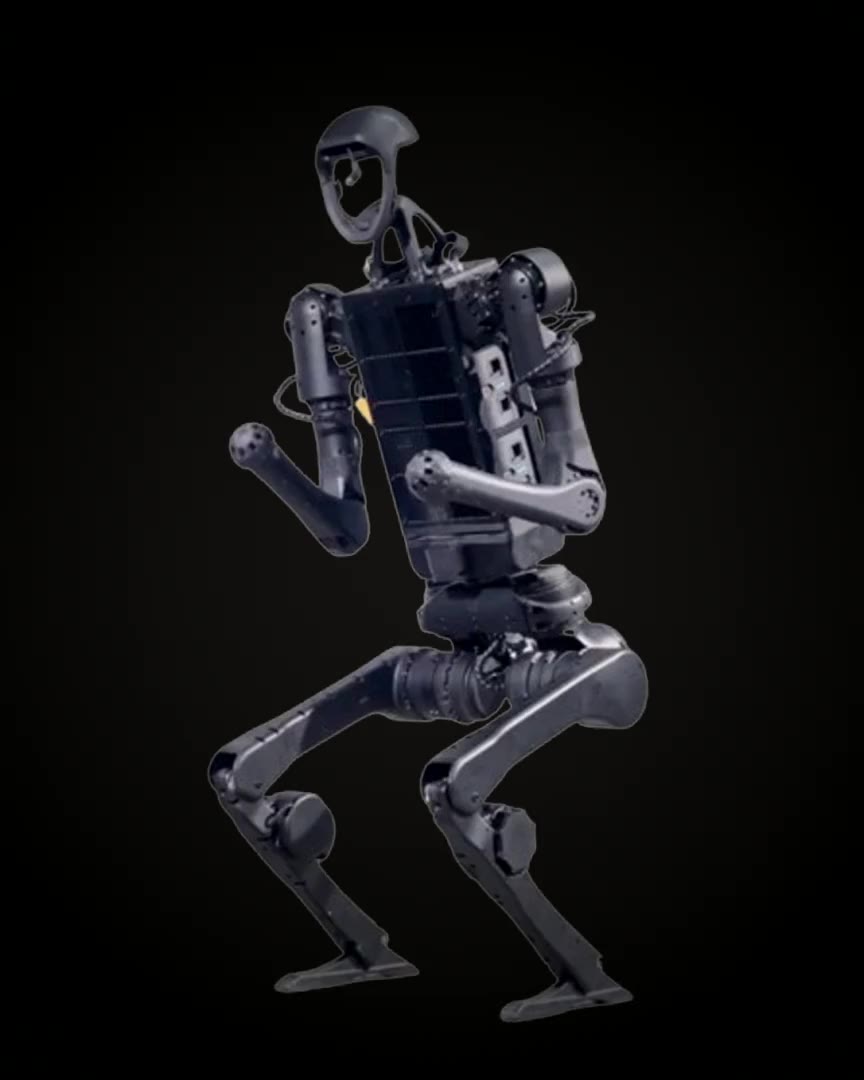
2A humanoid does not replace five employees and leave you needing nobody in their place.
It replaces five employees per position and adds a control room operator who looks after up to nine humanoids.
3The operator is your employee and is not part of the monthly fee.
We provide the training.
- Supervision and intervention
- Monitors the state of the fleet, deals with situations the robot cannot handle, and controls it remotely when needed.
- Task planning
- Assigns work to the robots according to what the operation needs at that moment.
1 : 9
operator team to humanoids
Monthly fee for a filled position
- Humanoid rental
- Service
- Replacement robot in the event of a fault
- Control app
On your side
- One-off installation fee
- Control room operator
- Electricity
4When the robot drops out, the position stays unfilled.
It is obvious, but it is the thing an operation should think through in advance: for a position held by people today, you have another shift in reserve; for a robot, you have us.
The procedure is remote diagnostics from the control room, then a service intervention, and if the robot cannot go on working, we supply a replacement. The replacement robot is part of the monthly fee, you do not pay extra for it.
Specific response times belong in the contract, because they differ according to the configuration of the station and how specific the end effector is. We are not going to promise you an hour here that we would then have to explain.
5Not every position is for a humanoid, even if it would suit us commercially.
Highly specialised static operations with a short cycle time.
There a single-purpose machine wins and will be cheaper.
Tasks requiring extreme precision.
A humanoid is universal, not more precise than a purpose-built manipulator.
Extremely dusty, humid or outdoor environments without the corresponding certification of the platform.
Stations accessible only by stairs or over uneven terrain.
A mobile base needs a step-free route.
Operations where there is nobody to act as control room operator.
Technical questions
Can the robot work without operator supervision?
What happens during an internet outage?
Can the robot climb stairs?
Can it be retrained for a different task?
What about precision and cycle time?
How many robots can one operator team look after?
Who is liable for the safety of the station?
Does it still sound usable?
Then it makes sense to meet. We will go through your positions and tell you which of them fall into this category and which do not.