The end effector decides whether the robot can do the task
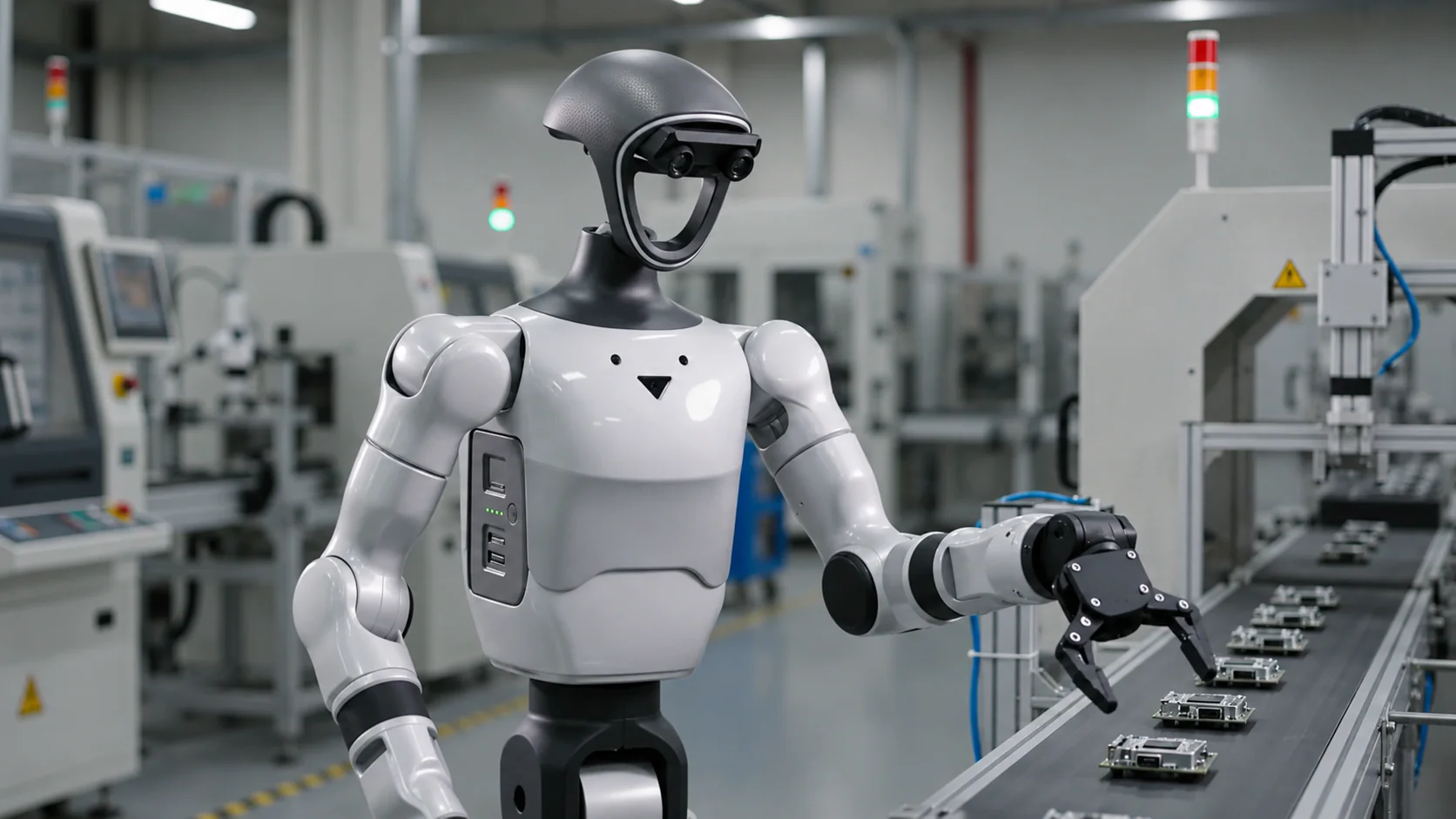
The platform determines where the robot can reach and how much it can carry. Whether it actually does the job comes down to what it has at the end of its arm and what it sees with.
Made for the task, not from a catalogue
A universal hand that can do everything does not exist today. That is why we design the end effector for the specific task: a jaw for a cardboard box looks different from a grip for a slippery moulded part, and different again from a tool that has to screw something in.
When the task shifts, it is usually not the robot that changes but the effector. That is one of the main reasons a humanoid makes sense where production is being rearranged.
The effector is the part of the solution that changes most often, and most cheaply.
What we fit to the robot
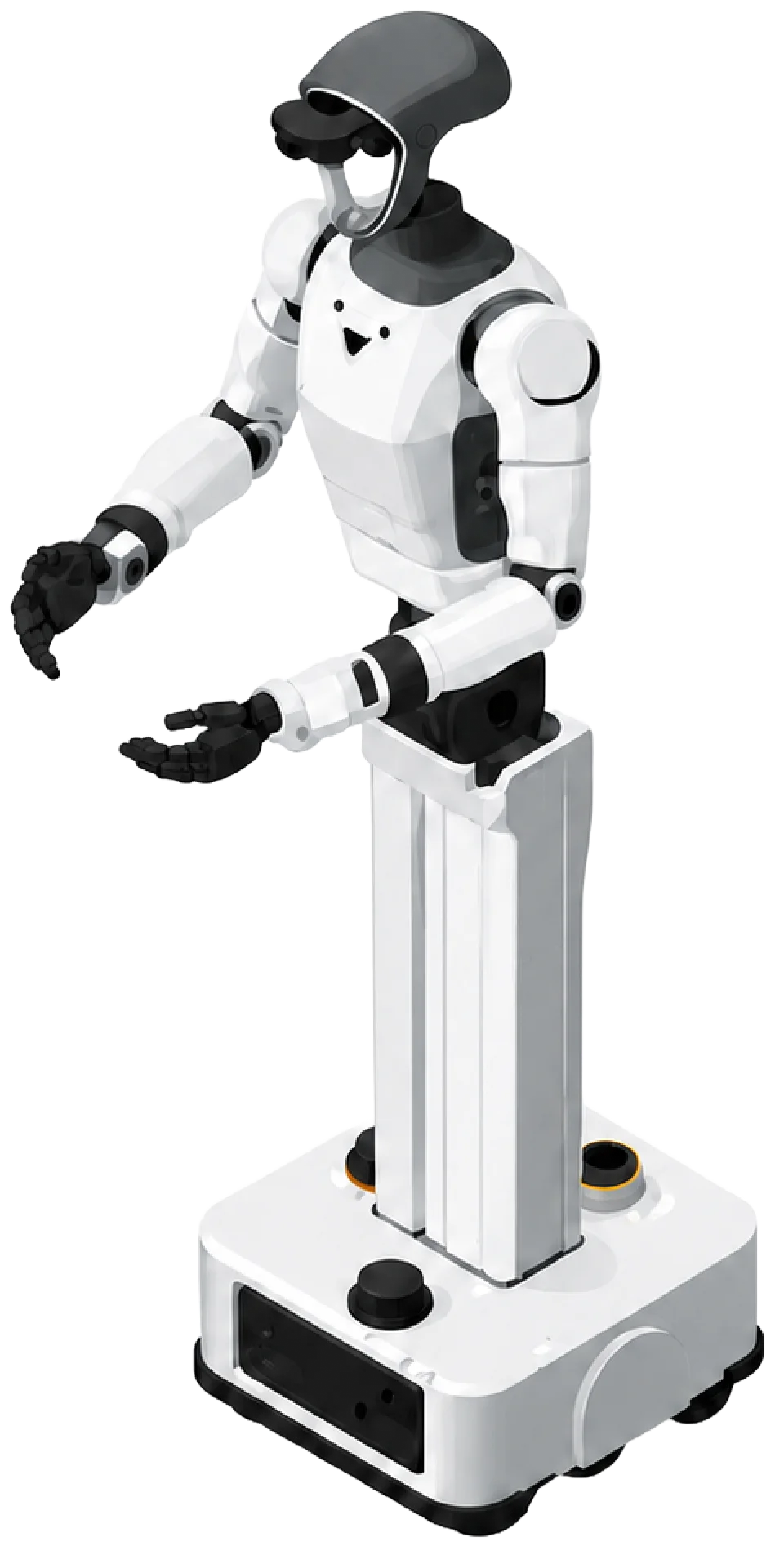
Vision
Cameras for recognising the part, its position and orientation, and where needed for visual quality inspection. Without vision a humanoid is a blind manipulator that runs its programme regardless of what is in front of it.
Sensors
Force and torque sensors, presence detection, distance measurement. They serve both the task and safety: the robot knows it has hit something before the part does.
Grippers
Two-jaw, multi-finger and vacuum. The choice follows from the shape, weight and surface of the part and from how precisely it has to be gripped.
Tools and fixtures
Screwdrivers, applicators, holding stands, fixtures at the station. Sometimes it is cheaper and more reliable to modify the station than the effector.
How an effector is made
Task analysis
We measure the part, look at how it is handled manually today, and ask what happens when the grip fails.
Design and testing
We design the effector and test it on real parts, not on a drawing. Most surprises appear here, and this is the right place for them.
Change of task
When the task changes, we rework the effector and the robot stays the same. That is the difference from a single-purpose machine, which is written off at that point.
Do you have a part you think the robot cannot grip?
Send us its dimensions, weight and material, ideally with a photo. Sometimes the answer is no, and you will learn that quickly too.